Driving in Darwin and across the Top End puts unique mechanical stress on vehicles. Unlike temperate southern cities, cars in the Northern Territory endure year-round high ambient temperatures, heavy monsoonal humidity, sudden tropical downpours, and long stretches of high-speed highway or red-dirt rural tracks.
Understanding the most frequent causes of vehicle breakdowns in Darwin helps you spot early warning signs—and know when to call a professional tow truck before a minor fault turns into major engine damage.
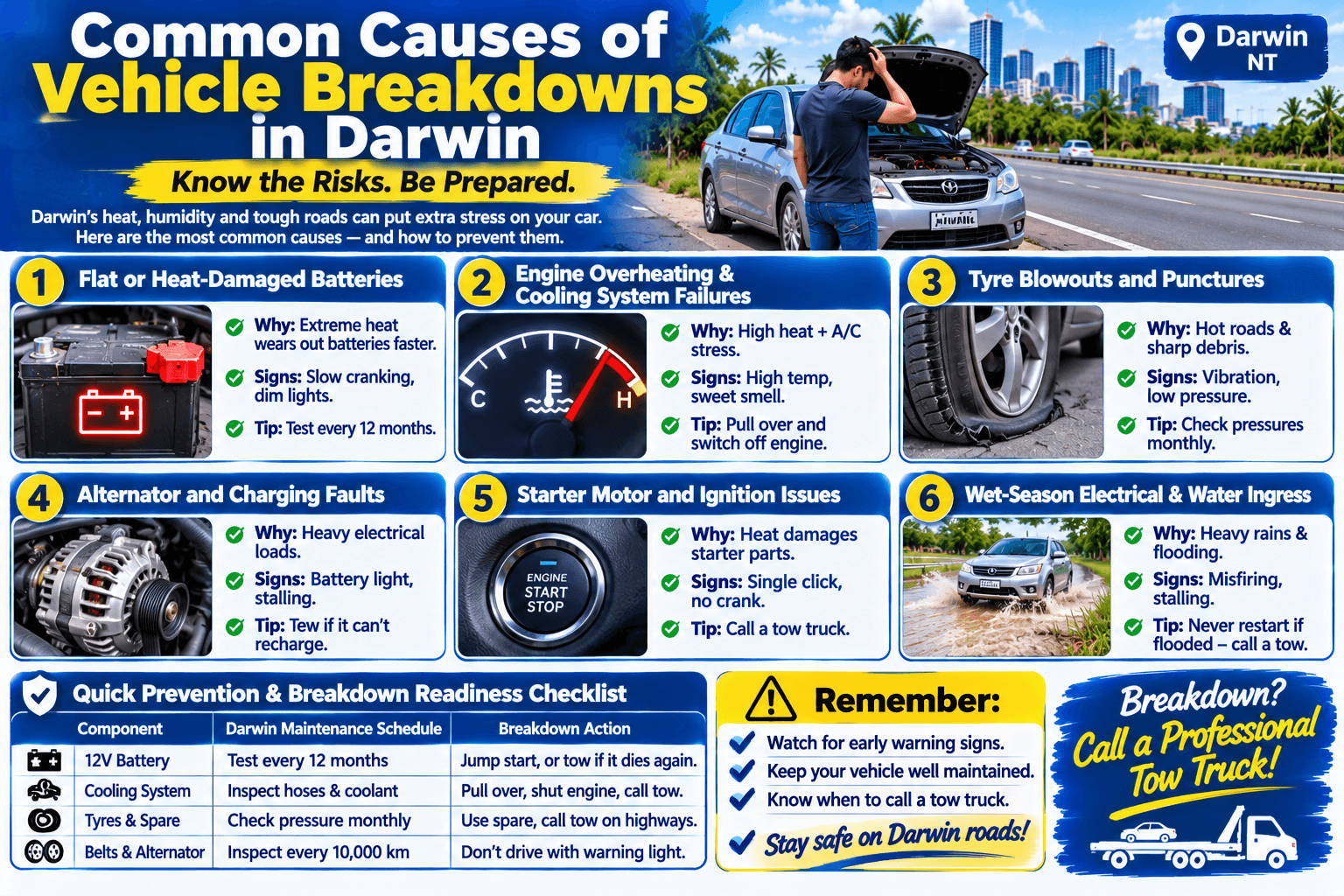
- Flat or Heat-Damaged Car Batteries
Battery failure is the number one reason Darwin motorists get stranded. While many drivers associate dead batteries with cold winters, extreme tropical heat actually destroys car batteries faster than cold weather.
- Why It Happens in Darwin: Year-round heat accelerates internal fluid evaporation and corrodes lead battery plates. A battery that survives five years in Melbourne or Sydney often fails in two to three years in Darwin.
- Warning Signs: Slow engine cranking, dim headlights at idle, or clicking noises when turning the key.
- Prevention Tip: Have your battery’s Cold Cranking Amps (CCA) and charging voltage tested every 12 months—especially before the humid "build-up" season arrives.
- Engine Overheating & Cooling System Failures
Sustained 32°C–36°C daytime temperatures, high humidity, and constant air-conditioning use push cooling systems to their limits.
- Why It Happens in Darwin: Perished rubber radiator hoses, stuck thermostats, worn water pumps, or failing electric thermo-fans quickly cause engine temperatures to spike in stop-start traffic around Darwin CBD and Palmerston. Dust and insects from rural highways also clog radiator fins, blocking airflow.
- Warning Signs: Temperature needle climbing toward the red zone, sweet coolant smells, or steam escaping from under the bonnet.
- What to Do: Pull over immediately and switch off the engine. Driving an overheating car for even a few minutes can warp cylinder heads or blow a head gasket.
- Tyre Blowouts and Punctures
Darwin drivers split their time between hot asphalt highways (like the Stuart Highway and Tiger Brennan Drive) and rough rural roads around Humpty Doo, Berry Springs, and national parks.
- Why It Happens in Darwin: Sun-baked tarmac increases internal tyre air pressure, causing under-inflated or aging tyres with dry-rotted sidewalls to fail at highway speeds. Heavy wet-season rains also wash sharp debris and hidden potholes onto road shoulders.
- Warning Signs: Steering wheel vibration, uneven tread wear, visible sidewall cracking, or low tyre pressure warnings.
- Prevention Tip: Check tyre pressures (including your spare) monthly when tyres are cold, and replace tyres showing sidewall cracks from UV exposure.
- Alternator and Charging System Faults
When your alternator stops generating electricity, your vehicle runs purely on stored battery power until the engine stalls completely.
- Why It Happens in Darwin: Heavy electrical loads—running the A/C compressor at full blast alongside headlights, infotainment systems, and dual-battery setups in 4WDs—place continuous strain on the alternator.
- Warning Signs: Flickering dashboard lights, a glowing red battery warning icon while driving, or the engine stalling shortly after a jump start.
- What to Do: Because a failed alternator cannot recharge the battery, jump-starting will only last a few minutes. Book a flatbed tow truck to take the vehicle directly to an auto electrician or mechanic.
- Starter Motor and Ignition Failures
If your battery is fully charged and dashboard lights shine brightly, yet the engine refuses to crank, a worn starter motor is often the culprit.
- Why It Happens in Darwin: Heat soak from the engine bay degrades starter motor solenoids and electrical contacts over time, especially in vehicles making frequent short trips around suburbs like Casuarina and Nightcliff.
- Warning Signs: A single loud "click" when turning the key or pressing the start button, with zero engine cranking.
- Wet-Season Electrical & Water Ingress Issues
During Darwin’s tropical wet season (November to April), intense monsoonal storms create flash flooding across low-lying roads and intersections.
- Why It Happens in Darwin: Driving through deep water splashes moisture into exposed wheel-speed sensors, alternator windings, ignition coils, or air intakes. Water ingested into the engine air intake causes hydro-lock, instantly bending internal connecting rods.
- Warning Signs: Sudden misfiring, dashboard warning lights illuminating after driving through puddles, or the engine cutting out mid-floodway.
- What to Do: Never attempt to restart an engine that stalled in floodwater; call a tilt-tray tow truck immediately to avoid catastrophic internal engine damage.
Quick Prevention & Breakdown Readiness Checklist
| Component | Darwin Maintenance Schedule | Breakdown Action |
|---|---|---|
| 12V Battery | Test voltage & health every 12 months | Try a jump start if lights were left on; tow if it dies again immediately. |
| Cooling System | Inspect hoses, coolant level & radiator fins every service | Turn off A/C, pull over safely, shut engine off, and call a flatbed tow. |
| Tyres & Spare | Check pressures and sidewall condition monthly | Swap spare only on a wide, safe verge; call a tow on busy highways. |
| Belts & Alternator | Inspect serpentine belt for cracks every 10,000 km | Do not keep driving with a red battery warning light; book a tow. |
Need an Honest, Upfront Towing Quote in Darwin?
Our tilt trays are on call 24/7 across Darwin, Palmerston, and surrounding NT highways.