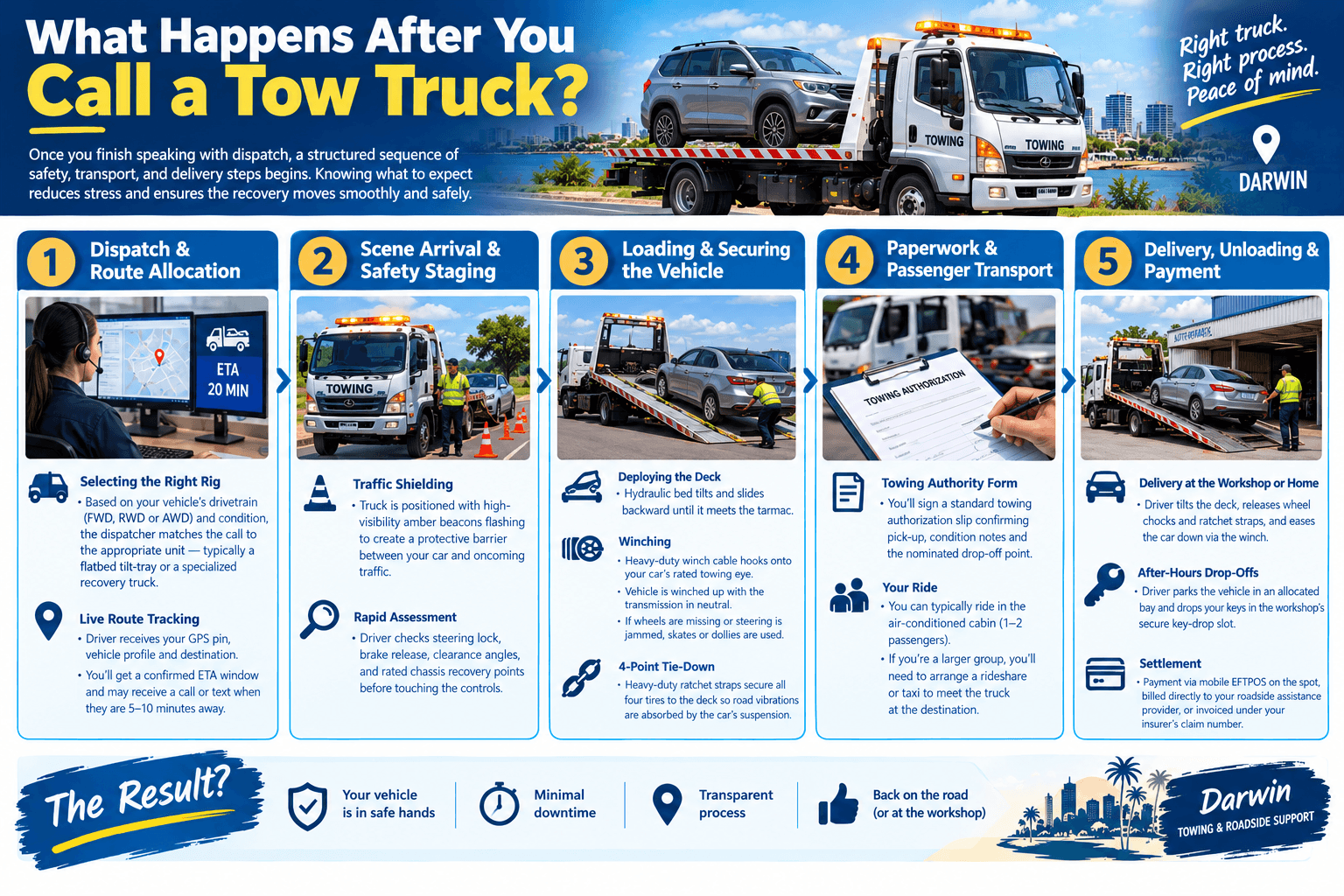
Once you finish speaking with dispatch, a structured sequence of safety, transport, and delivery steps begins. Knowing what to expect reduces roadside anxiety and ensures your recovery operation moves forward smoothly and securely.
- Dispatch & Route Allocation
The moment your call is logged, the towing operator coordinates equipment and routing to minimize response time:
- Selecting the Right Rig: Based on your vehicle’s drivetrain (FWD, RWD, or AWD) and physical condition, dispatch assigns the correct truck configuration—typically an 8-meter hydraulic tilt-tray or specialized recovery rig.
- Live Route Tracking & ETA Updates: The driver receives your exact GPS pin, vehicle profile, and delivery destination. Most local operators provide a realistic arrival window and will call or text when they are 5 to 10 minutes away.
- Scene Arrival & Safety Staging
Upon reaching your breakdown location, the operator's immediate priority is physical scene safety:
- Traffic Shielding: The operator positions the heavy tilt-tray angled toward traffic with high-output amber warning beacons flashing, creating a physical safety buffer between your disabled vehicle and high-speed passing traffic.
- Rapid Visual Assessment: Before engaging hydraulic controls, the driver inspects the perimeter to check steering lock status, transmission neutral release, undercarriage clearances, and factory recovery eye locations.
- Loading & Securing the Vehicle
Modern flatbed recovery relies on calibrated mechanical advantage rather than rough dragging:
- Deploying the Slide Bed: The hydraulic steel deck slides backward and lowers to a shallow ground angle to prevent front splitter or bumper scrapes.
- Controlled Winch Loading: A heavy-duty steel or synthetic winch line connects to your vehicle's rated recovery point, pulling the vehicle smoothly up the inclined ramp with the transmission in neutral. For vehicles with seized wheels or locked parking brakes, slick nylon skates or wheeled dollies are placed under the tires.
- 4-Point Soft Wheel Rigging: Once the deck levels onto the truck chassis, heavy-duty ratchet wheel straps wrap securely across all four tires, anchoring the vehicle directly to the steel deck so transit shocks are absorbed by the car's own suspension without putting stress on its chassis rails.
- Paperwork & Passenger Transport
Before leaving the breakdown scene, basic documentation and transport logistics are confirmed:
- Towing Authority Form: You will sign a standard towing consignment slip verifying the vehicle's pre-existing cosmetic condition, pickup address, and authorized destination.
- Passenger Ride-Along: Most single-cab tilt-trays can legally carry 1 to 2 passengers in the air-conditioned cabin directly to the repair shop or home. If you are traveling with a larger family group, you will need to arrange a rideshare or taxi to meet the truck at the destination.
- Delivery, Unloading & Payment Settlement
The transport sequence concludes with careful vehicle handover and clear paperwork:
- Safe Driveway or Workshop Placement: At the destination, the driver tilts the deck, unhitches the 4-point wheel harnesses, and uses the winch to reverse the vehicle smoothly into your driveway or mechanical bay.
- After-Hours Drop-Offs: If delivering to a workshop outside normal business hours, the vehicle is secured in an allocated holding bay, and the keys are deposited into the facility's secure key-drop safe.
- Payment Settlement: Payment is handled instantly on-site via mobile EFTPOS, billed directly through your roadside club provider, or cross-referenced against your confirmed insurance claim number.
Need an Honest, Upfront Towing Quote in Darwin?
Our tilt trays are on call 24/7 across Darwin, Palmerston, and surrounding NT highways.