Breaking down on the road is stressful at any hour, but having your car stall after sunset turns a routine inconvenience into a high-risk safety situation. Reduced road visibility, faster traffic speeds, and unlit highway shoulders significantly increase the danger of secondary collisions.
Whether you are commuting along an urban arterial or driving through an unlit regional corridor, knowing how to secure your car, make yourself visible, and coordinate roadside assistance ensures you stay safe until professional help arrives.
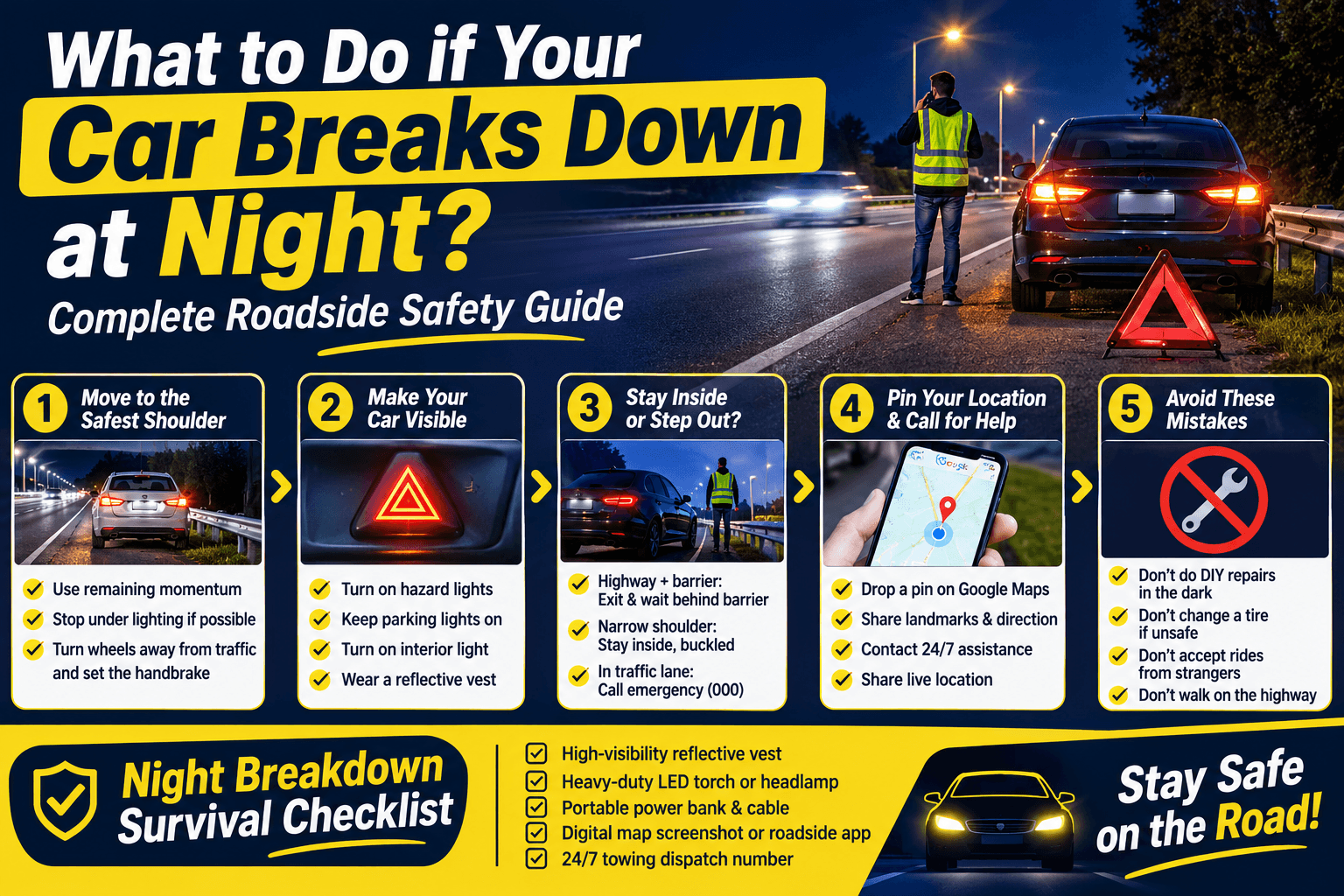
- Move to the Safest Available Shoulder Immediately
The moment your vehicle loses power, starts shuddering, or flags an urgent dashboard warning, focus on pulling off the active roadway:
- Use Remaining Momentum: Coast smoothly toward the leftmost shoulder or an emergency breakdown bay. Avoid braking violently in live traffic.
- Stop Under Overhead Lighting if Possible: If an exit ramp, illuminated service station, or streetlit stretch is within safe rolling distance, aim for that zone.
- Turn Your Wheels Away from Traffic: Turn your steering wheel away from the road toward the grass verge or guardrail, and firmly pull the handbrake. If an inattentive driver strikes your vehicle from behind, this prevents it from rolling back into active traffic lanes.
- Make Your Vehicle as Visible as Possible
At night, approaching motorists travel by headlights and have limited reaction time. You must illuminate your vehicle immediately:
- Activate Hazard Lights: Switch on your hazard flashers immediately. This provides an amber warning to approaching traffic from several hundred meters away.
- Keep Parking/Clearance Lights On: Keep your exterior clearance lights active so the vehicle’s physical outline remains visible in the dark.
- Turn On the Interior Dome Light: Turning on your cabin dome light illuminates the interior, signaling to approaching drivers that the vehicle is stationary.
- Wear Reflective Gear: If you carry a high-visibility vest or jacket in your glove compartment or boot, put it on before opening any doors.
- Should You Stay Inside or Step Out?
One of the most dangerous decisions during a nighttime breakdown is choosing where to wait. The answer depends entirely on your immediate surroundings:
| Location & Traffic Conditions | Recommended Action | Critical Safety Rule |
|---|---|---|
| High-Speed Highway with Metal Barrier | Exit and wait behind the barrier | Exit strictly via the passenger side away from road traffic. Stand well upstream behind the steel guardrail. |
| Narrow Shoulder, No Barrier, Unlit Road | Remain buckled inside the cabin | Lock all doors, keep your seatbelt fastened, and ensure hazard lights remain flashing. |
| Car Stranded in a Live Traffic Lane | Call Emergency Services (000 / 911 / 112) immediately | Do not attempt to push the car in the dark. Keep your seatbelt buckled until emergency crews arrive. |
- Pin Your Location and Call for Assistance
Once you are in a safe position, request recovery support right away:
- Drop a Digital Pin: Open Google Maps or your mobile navigation app and drop a pin on your coordinates to share your exact location.
- Note Landmarks and Direction: Identify your travel direction (e.g., "Northbound along the highway, 2 km past the service centre") and any nearby road markers, exit signs, or overpasses.
- Contact 24/7 Dispatch: Call your roadside assistance provider or an on-demand 24/7 tilt-tray tow truck directly.
- Share Live Tracking with Family: Send your live location to a family member or friend so someone knows where you are stationed while waiting.
- What NOT to Do During a Night Breakdown
- Do Not Attempt Complex DIY Repairs in the Dark: Avoid crawling under the vehicle or trying to fix mechanical linkages on an unlit shoulder.
- Do Not Change a Tire on the Roadside: If the punctured tire is on the traffic-facing side of the car, do not attempt to jack it up. A passing vehicle can clip you in seconds. Wait for a recovery patrol with protective flashing beacons.
- Do Not Accept Unsolicited Rides: If an unregistered passerby offers a ride, remain inside with the doors locked and speak through a slightly cracked window. Let them know professional roadside assistance is already dispatched and en route.
- Do Not Walk Along the Highway: Walking on unlit rural verges in search of fuel or help significantly raises pedestrian strike risks. Always stay with your vehicle.
Night Breakdown Survival Checklist
Keep this essential kit ready in your vehicle:
- High-visibility reflective vest kept within cabin reach
- Heavy-duty LED torch or rechargeable headlamp
- Portable lithium power bank and dedicated phone charging cable
- Offline digital map or roadside assistance app downloaded
- 24/7 local towing dispatch number saved in your mobile contacts
Need an Honest, Upfront Towing Quote in Darwin?
Our tilt trays are on call 24/7 across Darwin, Palmerston, and surrounding NT highways.