Safety & Breakdown Guides
16 November 2026
7 min read
Darwin’s tropical heat, high humidity, and long stretches of highway driving place extreme stress on vehicle cooling systems—especially during the sticky "build-up" months and heavy dry-season touring. When an engine overheats, continuing to drive for even a few minutes can warp aluminium cylinder heads, blow a head gasket, or seize the motor entirely.
Follow these immediate steps to protect your engine and stay safe on Top End roads.
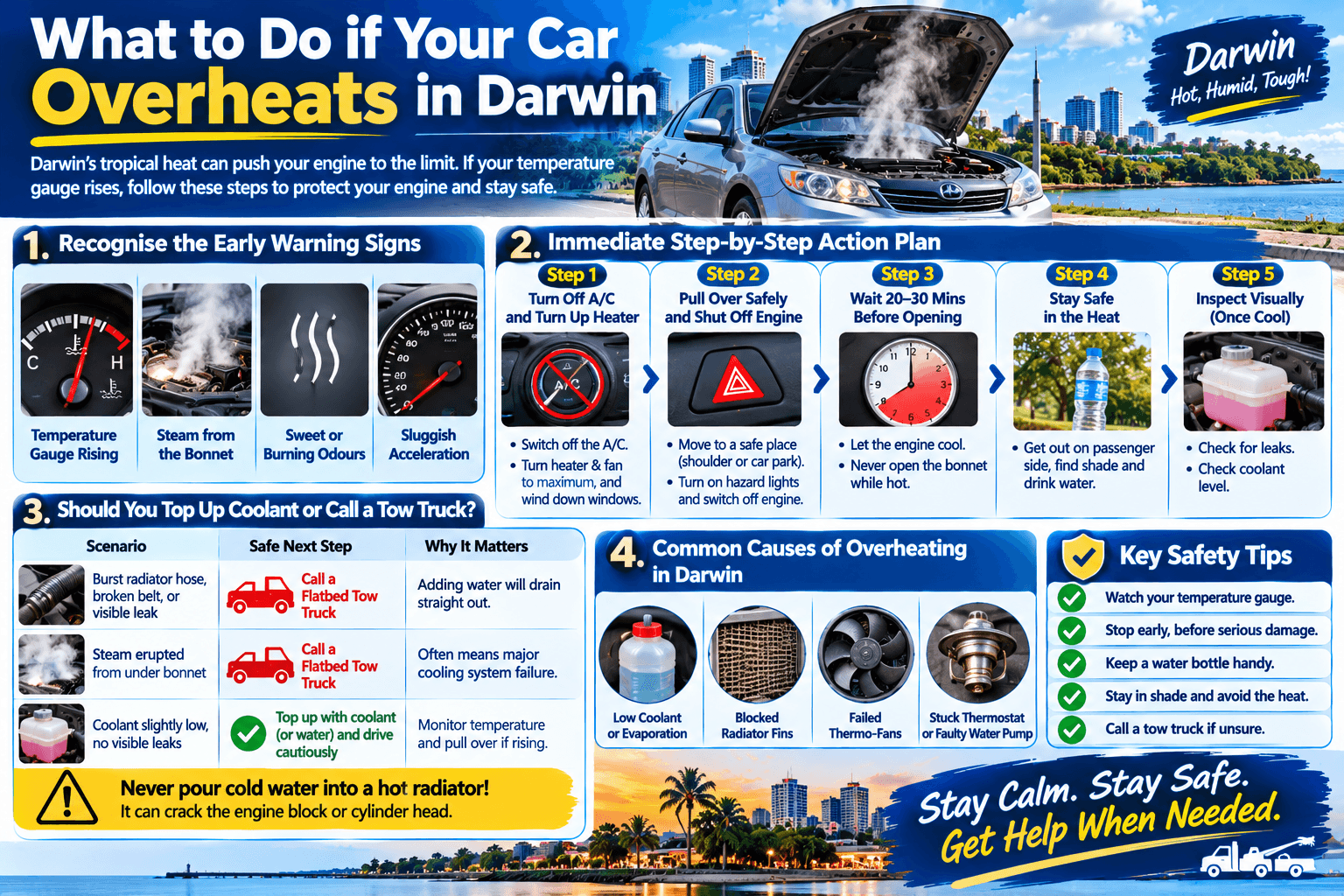
- Recognise the Early Warning Signs
Act as soon as you notice any of the following symptoms:
- Temperature Gauge Rising: The dashboard needle creeps past the halfway mark toward the red zone (H), or a red thermometer warning icon illuminates.
- Steam Rising from the Bonnet: White vapour escaping from under the hood indicates boiling coolant or a ruptured radiator hose.
- Sweet or Burning Odours: A sweet, syrupy smell signals leaking coolant hitting hot metal, while a sharp burning smell indicates overheating rubber hoses or belts.
- Sluggish Acceleration or Ticking Noises: Excessive heat causes internal metal components to expand, reducing power output.
- Immediate Step-by-Step Action Plan
- Step 1 — Turn Off the Air Conditioning and Turn Up the Heater: It feels counterintuitive in Darwin's 35°C heat, but switching off the A/C immediately removes a major load from the engine. Next, turn the cabin heater and fan to maximum and wind down your windows. The heater core acts like a mini-radiator, drawing excess heat directly away from the engine block while you look for a safe place to stop.
- Step 2 — Pull Over Safely and Shut Off the Engine: Indicate early and steer off active traffic lanes onto a wide verge, service station, or shaded parking bay—especially along high-speed corridors like the Stuart Highway or Tiger Brennan Drive. Switch on your hazard lights and turn off the ignition immediately. Do not let the engine idle.
- Step 3 — Wait at Least 20–30 Minutes Before Opening the Bonnet: Modern cooling systems operate under high pressure. Never open the radiator cap or coolant reservoir while the engine is hot—superheated steam and boiling coolant can erupt violently and cause severe skin burns. Keep the bonnet closed until the temperature gauge drops and the hood feels cool to the touch.
- Step 4 — Stay Safe in the Top End Heat: Do not remain trapped inside a locked, unventilated vehicle with the windows up; Darwin cabin temperatures skyrocket within minutes. Step out on the passenger side away from passing traffic, find shade if safe to do so, and stay hydrated while staying near your vehicle.
- Step 5 — Inspect Visually (Once Completely Cool): Once the engine has cooled for at least 30 minutes, look underneath the car for puddles of green, pink, red, or orange fluid and check the translucent plastic coolant overflow reservoir. If it is completely empty, or if you see split radiator hoses or a broken fan belt, do not attempt to drive the car.
- Should You Top Up Coolant or Call a Tow Truck?
| Scenario | Safe Next Step | Why It Matters |
|---|---|---|
| Burst radiator hose, broken belt, or visible leak | Call a flatbed tow truck | Adding water will drain straight out onto the road and overheat the engine again immediately. |
| Steam erupted from under the bonnet | Call a flatbed tow truck | Severe boil-overs often mean a failed water pump, stuck thermostat, or compromised head gasket. |
| Coolant reservoir slightly low, no visible leaks | Top up once cool & drive cautiously to mechanic | Only drive short distances while watching the temperature gauge constantly. Pull over immediately if it rises again. |
Important Engine Warning: Never pour cold water directly into a scorching-hot radiator or engine block—the sudden thermal shock can crack the cast metal block or cylinder head.
- Common Causes of Overheating in Darwin
- Low Coolant or Evaporated Fluid: High ambient temperatures accelerate fluid loss through worn radiator caps or aging hoses.
- Blocked Radiator Fins: Dust, red dirt from rural tracks, and insects clog radiator airflow, preventing heat dissipation.
- Failed Thermo-Fans: Stop-start traffic in Darwin CBD or Palmerston relies heavily on electric cooling fans; if a fan motor fails, temperatures spike rapidly while idling.
- Stuck Thermostat or Faulty Water Pump: Stops coolant from circulating between the engine block and the radiator.
Need an Honest, Upfront Towing Quote in Darwin?
Our tilt trays are on call 24/7 across Darwin, Palmerston, and surrounding NT highways.