Safety & Breakdown Guides
23 October 2026
7 min read
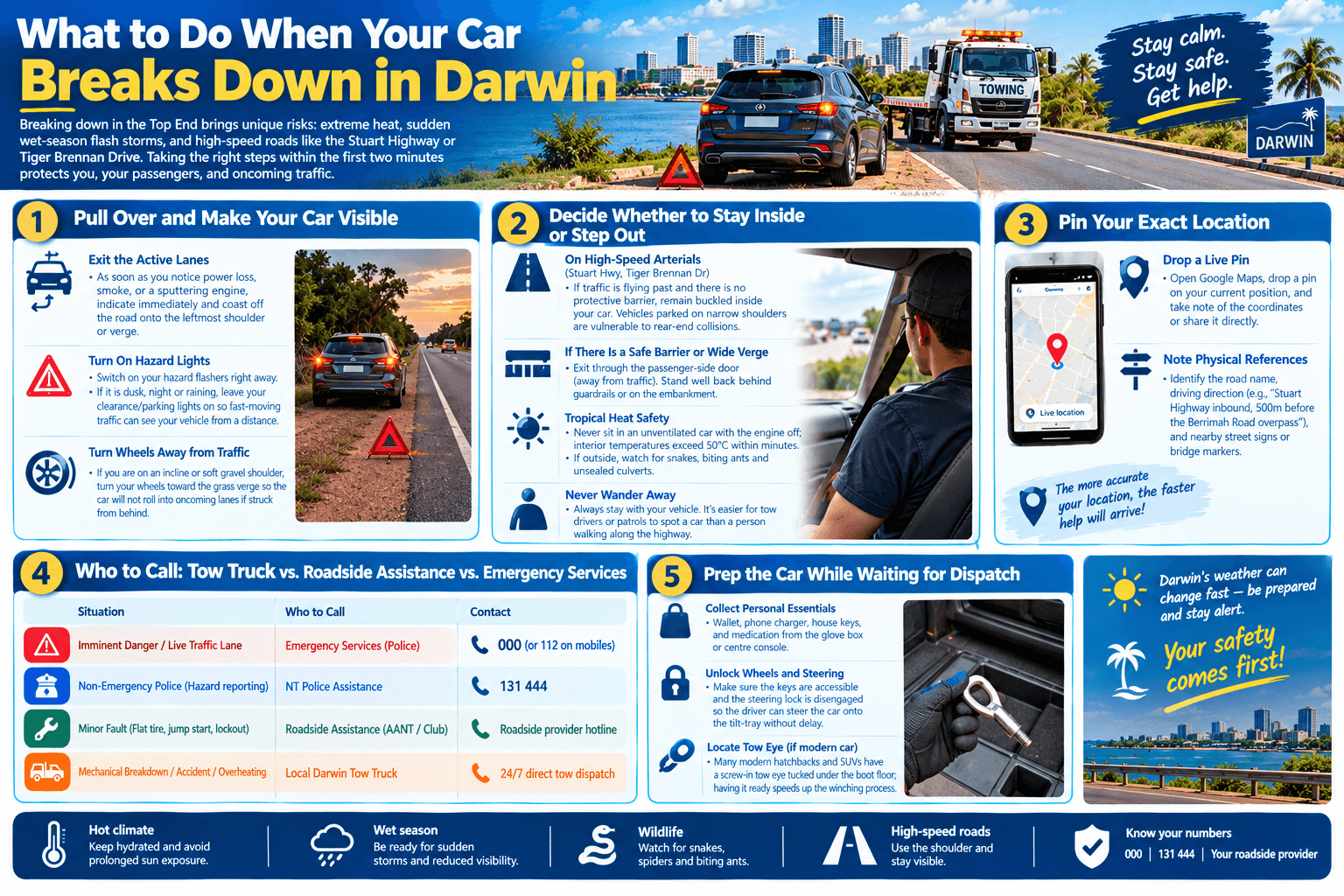
Breaking down in the Top End brings unique risks: extreme heat, sudden wet-season flash storms, and high-speed arterial roads like the Stuart Highway or Tiger Brennan Drive. Taking the right safety steps within the first two minutes protects you, your passengers, and oncoming traffic.
Follow this immediate action plan if your vehicle breaks down in Darwin:
- Pull Over and Make Your Car Visible
- Exit the Active Lanes: As soon as you notice power loss, smoke, or a sputtering engine, indicate immediately and coast off the road onto the leftmost shoulder or verge.
- Turn On Hazard Lights: Switch on your hazard flashers right away. If it is dusk, night, or raining during a tropical downpour, leave your clearance/parking lights on so fast-moving traffic can see your vehicle from a distance.
- Turn Wheels Away from Traffic: If you are parked on an incline or soft gravel shoulder, turn your wheels toward the grass verge so the car will not roll into oncoming lanes if struck from behind.
- Decide Whether to Stay Inside or Step Out
In Darwin, traffic conditions and weather dictate where you should wait:
- On High-Speed Arterials (Stuart Hwy, Tiger Brennan Dr): If traffic is flying past and there is no protective metal barrier, remain buckled inside your car. Vehicles parked on narrow shoulders are vulnerable to secondary rear-end collisions.
- If There Is a Safe Barrier or Wide Grass Verge: Exit through the passenger-side door (away from traffic). Stand well back behind safety guardrails or high up on the embankment.
- Tropical Heat Safety: Never sit in an unventilated car during Darwin’s build-up or dry season if the engine is off; interior cabin temperatures exceed 50°C within minutes. If stepping out into the shade of trees or verges, watch for snakes, biting ants, and unsealed culverts.
- Never Wander Away: Northern Territory Police and emergency services advise to always stay with your vehicle. A car is much easier for tow drivers or roadside patrols to spot than a person walking along the highway.
- Pin Your Exact Location
Tow truck drivers and roadside patrols cannot assist without precise coordinates:
- Drop a Live Pin: Open Google Maps, drop a pin on your current position, and take note of the coordinates or share it directly.
- Note Physical References: Identify the road name, driving direction (e.g., "Stuart Highway inbound, 500m before the Berrimah Road overpass"), and nearby street signs or bridge markers.
- Who to Call: Decision Guide
| Situation | Who to Call | Contact |
|---|---|---|
| Imminent Danger / Live Traffic Lane | Emergency Services (Police) | 000 (or 112 on mobiles) |
| Non-Emergency Hazard (Road obstruction) | NT Police Assistance | 131 444 |
| Minor Fault (Flat tire, jump start, lockout) | Roadside Assistance (AANT / Club) | Roadside provider hotline |
| Mechanical Breakdown / Accident / Overheating | Local Darwin Tow Truck | Direct dispatch (0436 472 708) |
- Prep the Car While Waiting for Dispatch
- Collect Personal Essentials: Grab your wallet, phone charger, house keys, and medication from the glove box or centre console before the tow truck arrives.
- Unlock Wheels and Steering: Make sure the keys are accessible and the steering lock is disengaged so the driver can steer the car onto the tilt-tray without delay.
- Locate Tow Eye (Modern Cars): Many modern hatchbacks and SUVs have a screw-in tow eye tucked under the boot floor; having it ready speeds up the winching process.
Top End Safety Reminder: Always keep at least 2 to 3 litres of drinking water stored in your vehicle when travelling on Darwin highways or regional rural roads.
Need an Honest, Upfront Towing Quote in Darwin?
Our tilt trays are on call 24/7 across Darwin, Palmerston, and surrounding NT highways.