Trying to "limp" a compromised car home or to a workshop often turns a repairable issue into total engine failure, transmission destruction, or a severe road collision. Knowing the exact line between a roadside DIY fix and an immediate tow saves thousands in repair bills while keeping you safe.
Call a professional tow truck immediately in any of the following situations:
Quick Decision Matrix: Drive, Wait, or Tow?
| Vehicle Symptom | Can You Drive It? | Action Required |
|---|---|---|
| Solid Amber Check Engine Light | Yes (Cautiously) | Drive directly to a mechanic; avoid hard acceleration. |
| Flashing Check Engine Light | No | Pull over safely and call a flatbed tow truck. |
| Punctured Tire with Usable Spare | No (until swapped) | Swap tire on safe ground, or call roadside assistance. |
| Radiator Steaming / Temp in Red | No | Turn engine off immediately; do not restart; call a tow. |
| Soft / Sinking Brake Pedal | No | Hazard to life; immobilize vehicle and call a tow. |
| Dead Battery (No other issues) | No (until jumped) | Call roadside assistance or jump-start. |
- After Any Moderate or Severe Collision
Even if the engine still turns on after an accident, never attempt to drive away if:
- Airbags Deployed: Signals high crash deceleration that triggers automatic fuel shutoffs, blown sensors, and compromised structural integrity.
- Bodywork Rubs on Tires: Crumpled fenders or bumpers cutting into tires will cause sudden blowouts at speed.
- Bent Suspension or Axle Damage: If a wheel sits at an odd camber, pulls aggressively to one side, or scrapes, the steering linkage or control arms are structurally compromised.
- Leaking Vital Fluids: Puddles of pink, red, green, or amber fluid indicate cracked radiators, broken brake lines, or punctured oil pans.
- Critical Dashboard Warning Lights & Engine Failure
Modern vehicle ECUs show dashboard warnings for immediate component protection:
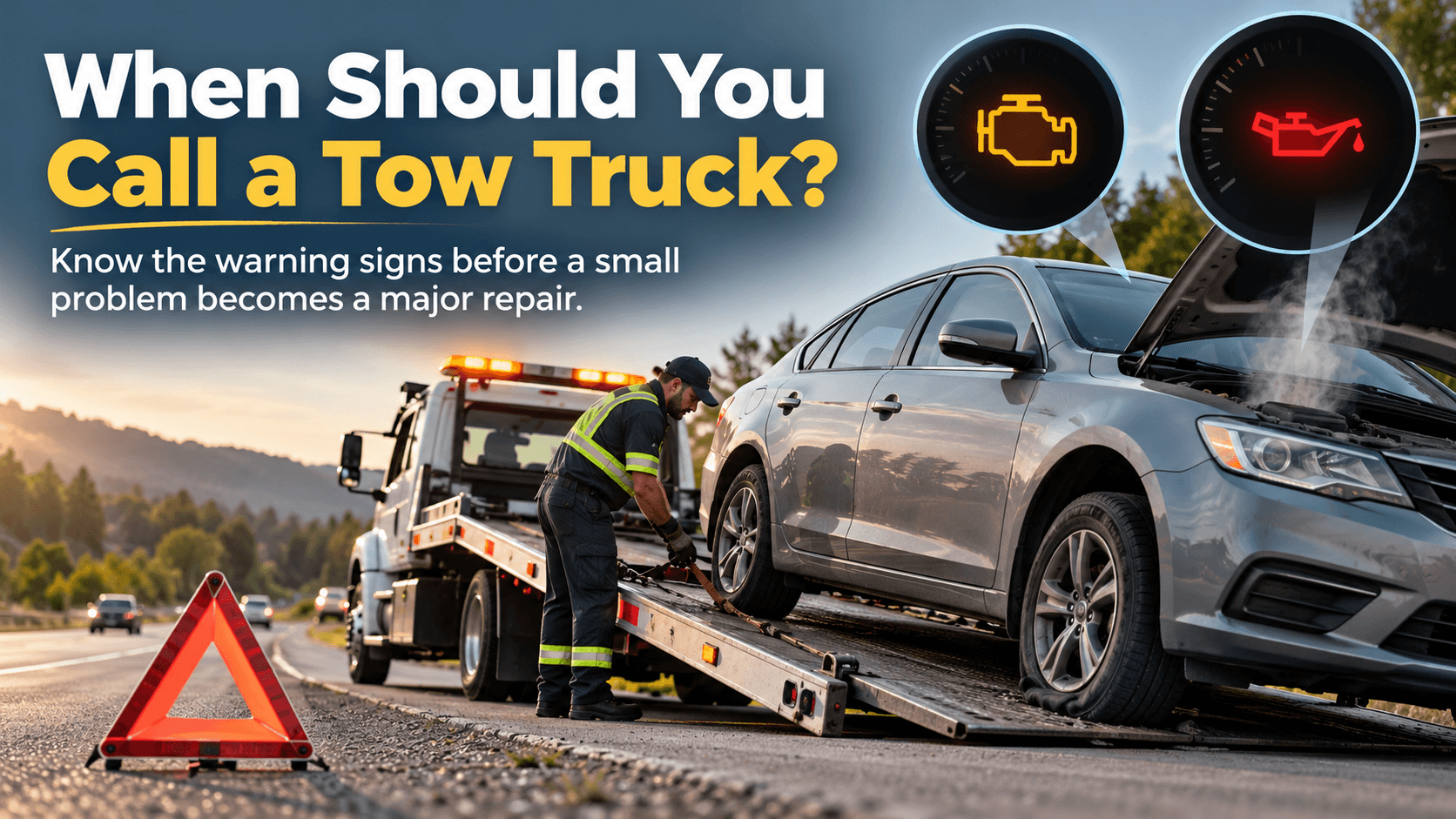
- Flashing Check Engine Light: Unlike a steady light, a flashing light means an active engine misfire is dumping unburnt fuel into the exhaust, which melts the catalytic converter and risks fire.
- Red Oil Pressure Warning (Oil Can Icon): Oil pressure has collapsed. Driving even 30–60 seconds with zero oil pressure will seize the engine bearings and destroy the motor.
- Temperature Gauge in the Red / Steam Rising: Steam indicates boiling coolant. Continued driving warps aluminum cylinder heads and blows head gaskets.
- Compromised Braking or Steering Systems
Never compromise on your vehicle's two primary safety controls:
- Sponge-like or Sinking Brake Pedal: If the pedal sinks directly to the floorboard or requires excessive pumping, hydraulic brake fluid has leaked out or the master cylinder has failed.
- Severe Metal Grinding: A deep, metal-on-metal grinding when stopping means the pads are gone and the calipers are chewing into the rotor discs, risking seized brakes.
- Total Power Steering Failure or Seized Rack: Sudden, violent resistance when turning the wheel makes emergency evasive maneuvers impossible on live roads.
- Transmission & Driveline Lockups
- Car Slips Out of Gear or Revs Without Moving: A blown clutch, burned transmission bands, or snapped driveshafts leave the car dead in traffic.
- Clunking and Grinding Under the Chassis: Indicates failing CV axles, universal joints, or differential gears. Forcing the vehicle forward can cause an axle to snap entirely, causing loss of control.
- Flat Tires in High-Risk or Complex Scenarios
While a flat tire is often a simple DIY change, call a tow truck when:
- You Are on a Busy Highway Shoulder: Changing a roadside tire on a high-speed motorway or blind turn is hazardous.
- No Usable Spare Wheel or Tools: Modern cars often lack full-sized spares, offering only puncture kits that fail on sidewall tears or rim damage.
- Multiple Punctures: A single spare tire cannot resolve two flat tires caused by potholes or debris.
- Seized Lug Nuts: Stripped threads or rusted nuts that will not budge with a standard hand tire iron.
- Off-Road, Mud, Sand, or Ditch Bogging
- High-Centered Chassis: If the vehicle's frame rests flat on sand, mud, or a ditch berm while the tires spin freely in the air, engine power will only dig the car deeper.
- Unstable Angles: Sliding down an embankment or steep ditch where self-recovery risks a vehicle rollover demands high-angle hydraulic winching.
Need an Honest, Upfront Towing Quote in Darwin?
Our tilt trays are on call 24/7 across Darwin, Palmerston, and surrounding NT highways.